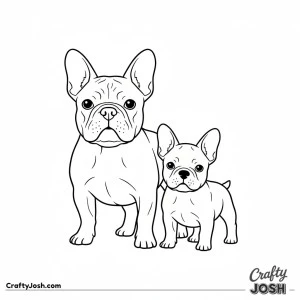
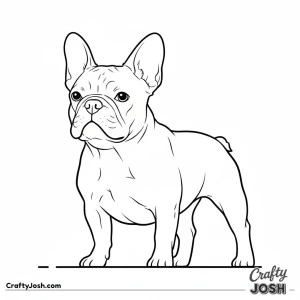
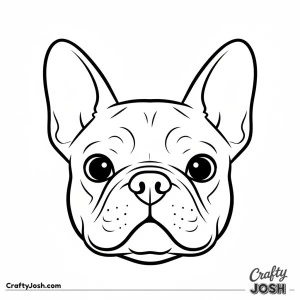
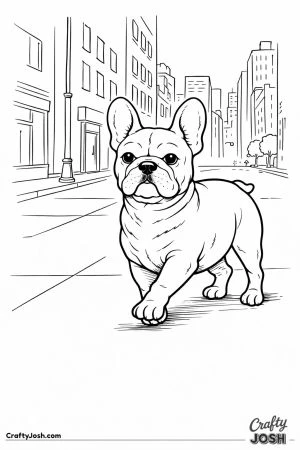
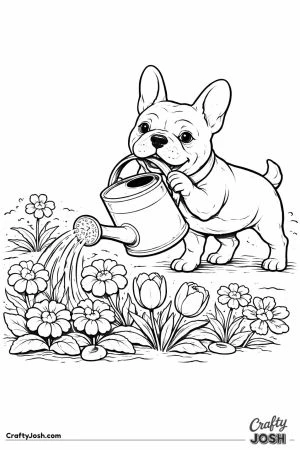
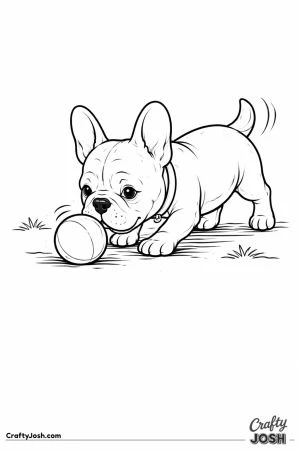
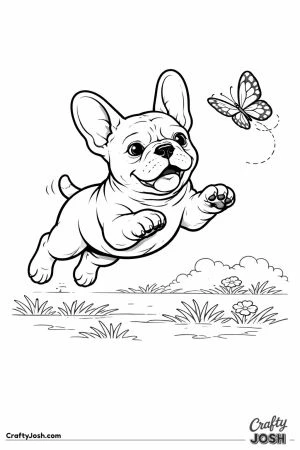
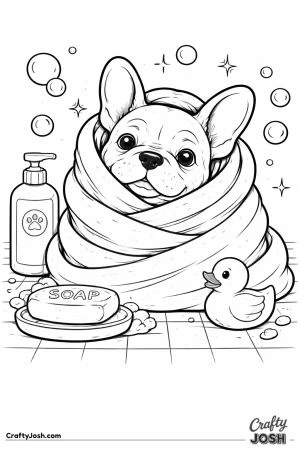
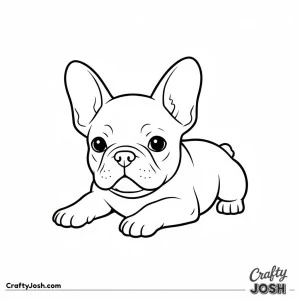
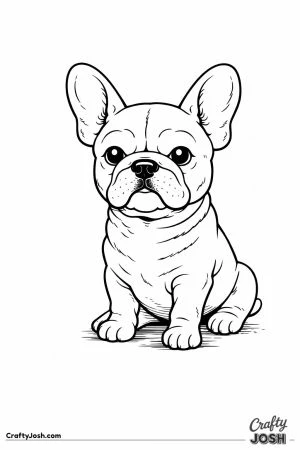
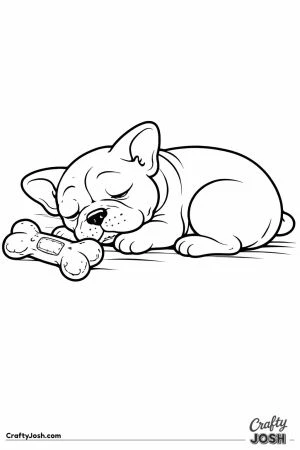
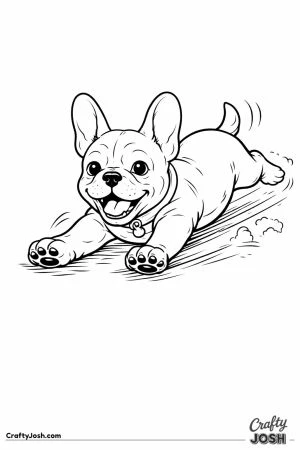
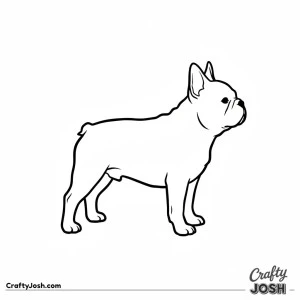
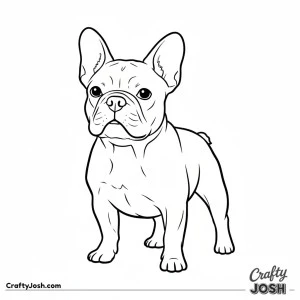
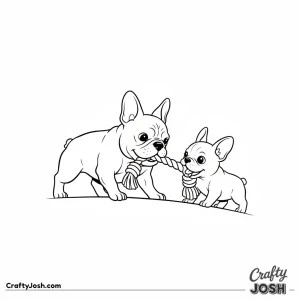
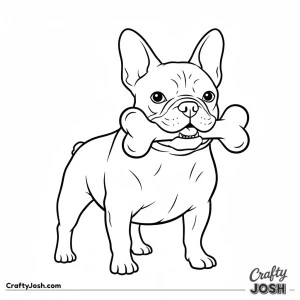
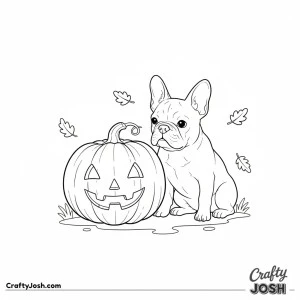
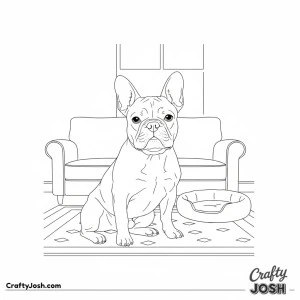
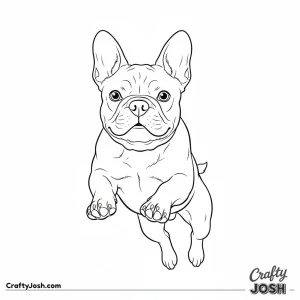
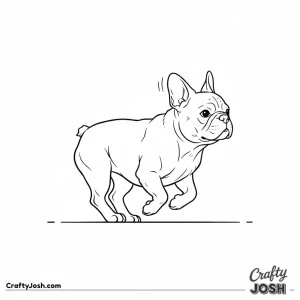
French Bulldogs may be small, but they have plenty of personality packed into those bat-like ears and sturdy little frames - and these French Bulldog coloring pages capture every bit of it.
The collection includes simple, bold outlines that work perfectly for toddlers and preschoolers, alongside slightly more detailed designs for older children and dog lovers who want a bit more to color.
Each page is a free black-and-white PDF printable, available in both US Letter and A4 sizes, so you can download and print them easily at home or use them as a relaxed classroom activity.
If you're browsing for another breed too, head over to our dogs coloring pages to see the full collection.
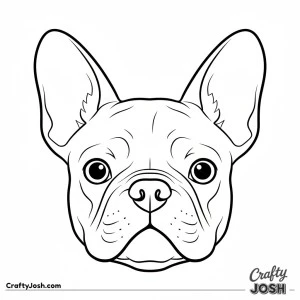
Those big bat ears. That's the first thing everyone notices about a French Bulldog, and it should be the first thing you color. They're tall, rounded at the top, and stand straight up - almost like two little satellite dishes. Use a darker shade on the outside and a lighter pink or peach on the inside to make them look real.
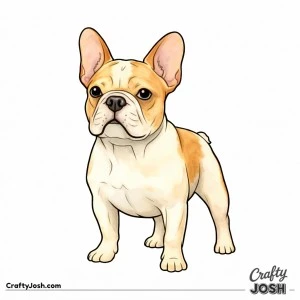
French Bulldogs come in quite a few colors. The most common ones are fawn (a warm sandy-brown), brindle (dark stripes mixed over a lighter base, like very faint tiger markings), cream, and solid black or white. Some have a mix of white and another color split into big, clean patches.
French Bulldogs don't actually come from France. They started out in England, and lace workers brought them to France when they moved there for jobs. The French loved them so much the breed got its name from there.
The face is flat and round with a very short nose, big wide-set eyes, and a little mouth that sometimes looks like it's smiling. For the eyes, dark brown or black works well - and because Frenchie eyes are so round and shiny, leaving a white dot in each one makes a huge difference.
A French Bulldog's body is small but very solid and square-shaped. Even though they're little, they're surprisingly heavy to pick up.
Because the fur is short and smooth all over, coloring a French Bulldog is more about getting the shapes and patches right than worrying about fur direction. Keep your strokes even and focus on making clean edges where one color meets another. If your page shows a brindle Frenchie, draw thin, wobbly lines in a darker shade over the top of your base color - don't make them too neat or too evenly spaced, because real brindle is a little messy and random.