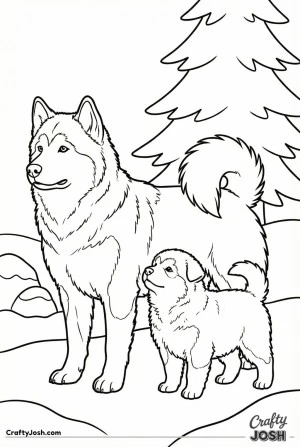
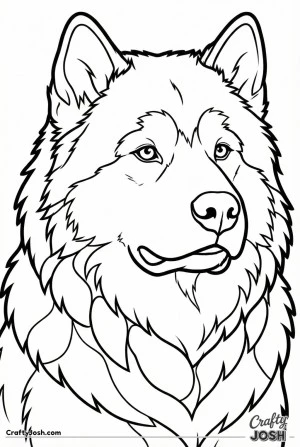
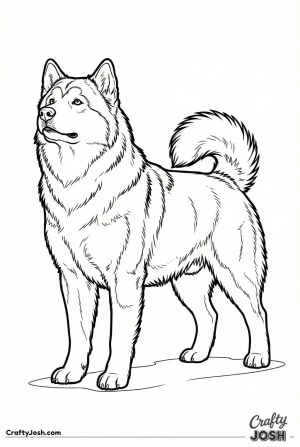
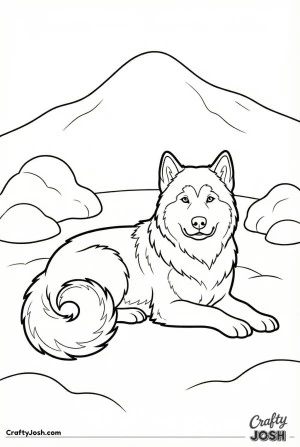
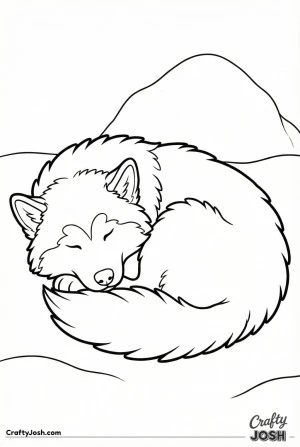
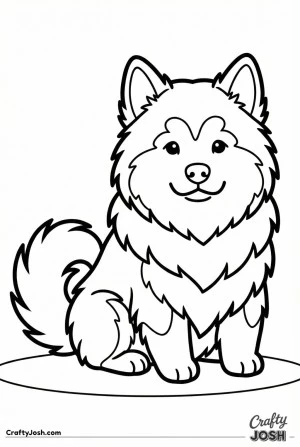
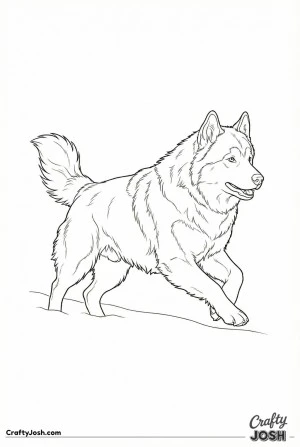
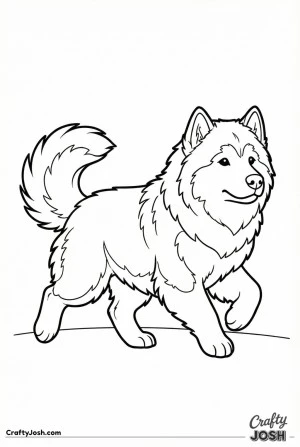
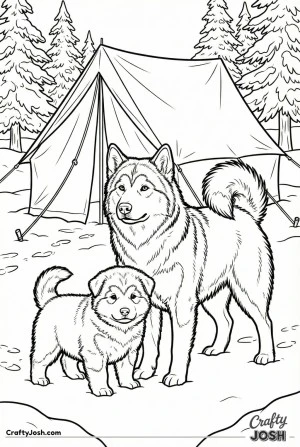
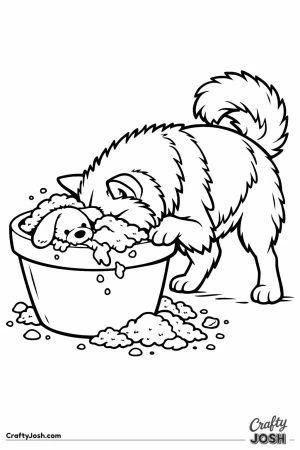
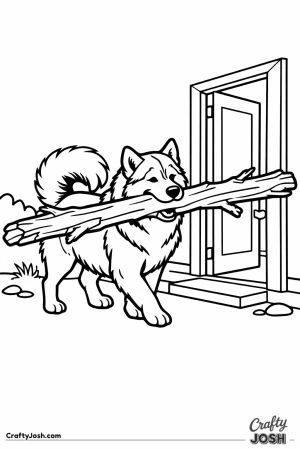
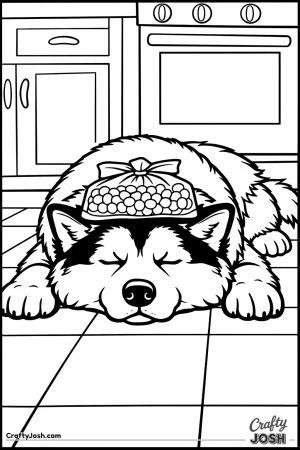
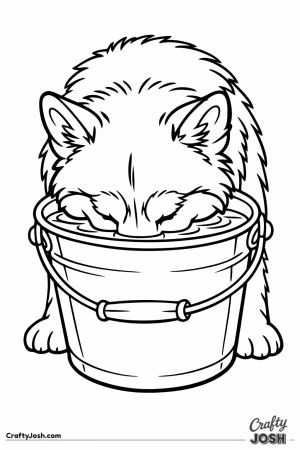
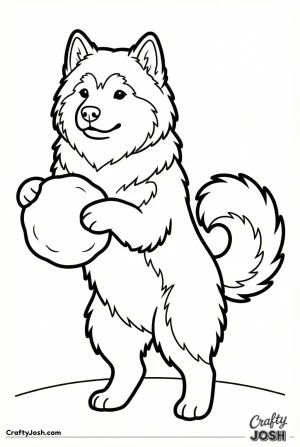
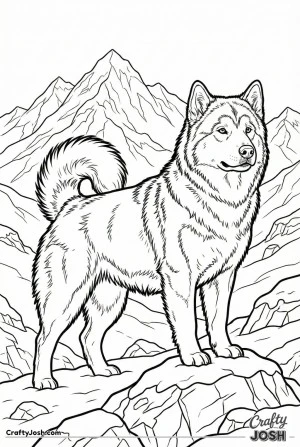
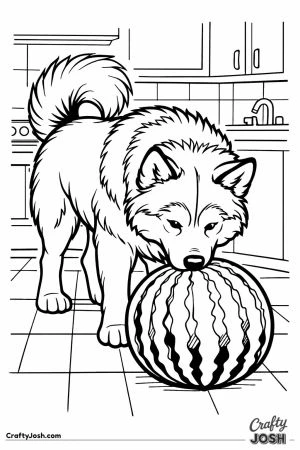
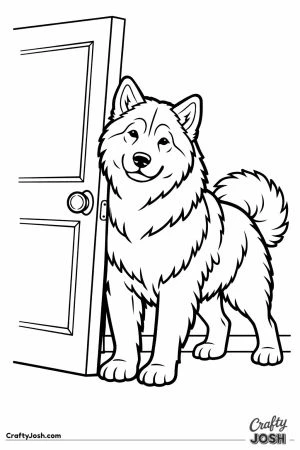
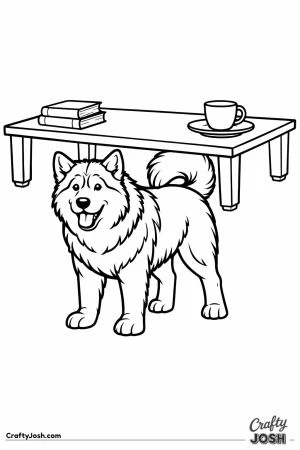
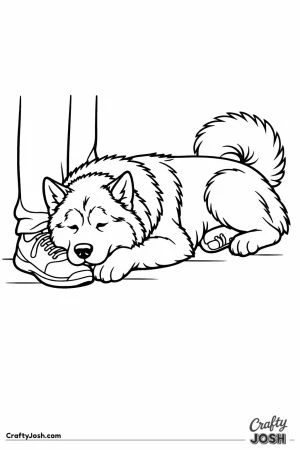
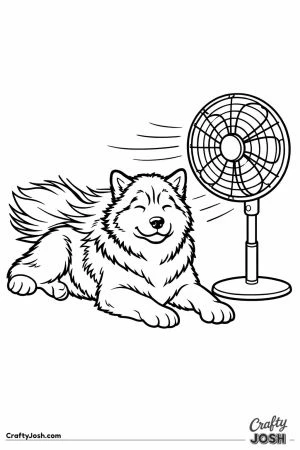
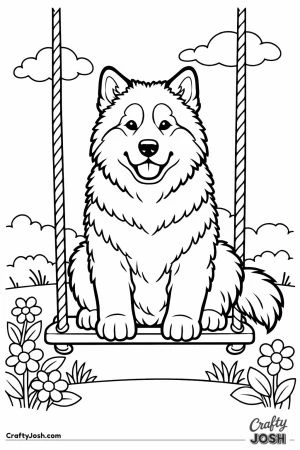
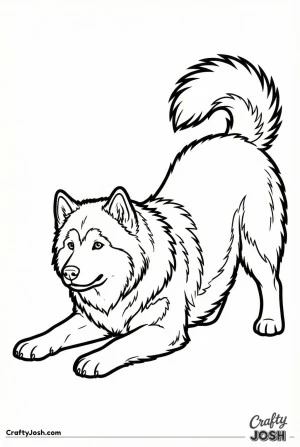
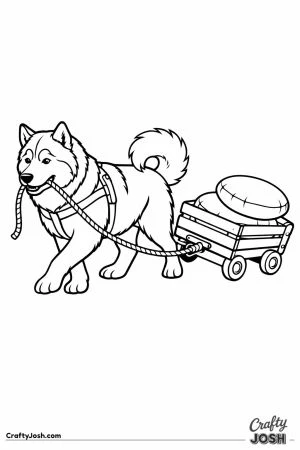
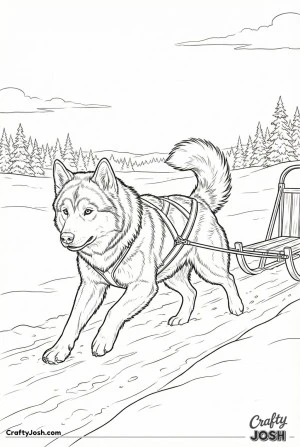
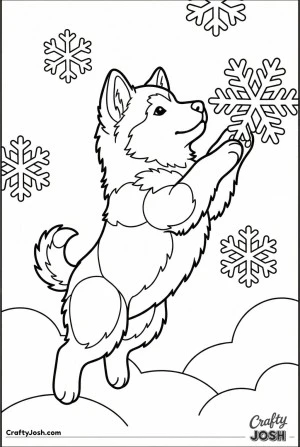
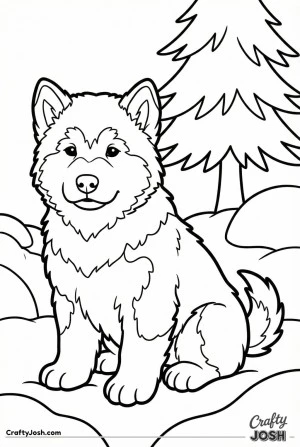
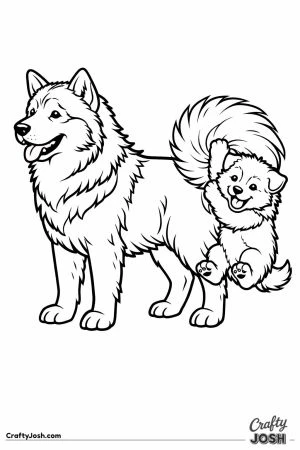
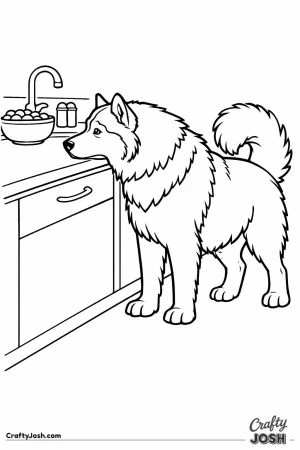
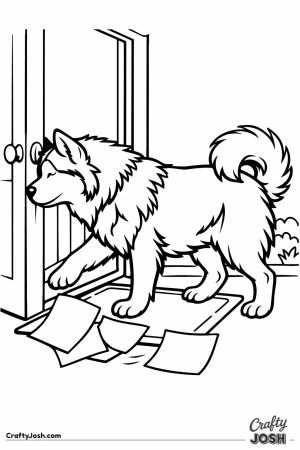
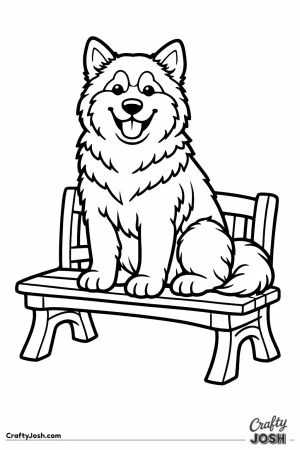
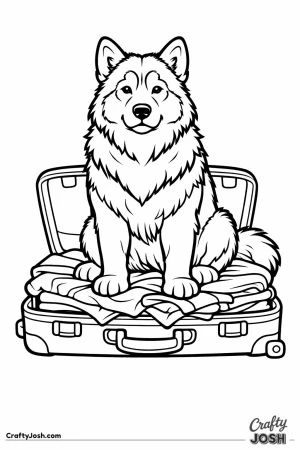
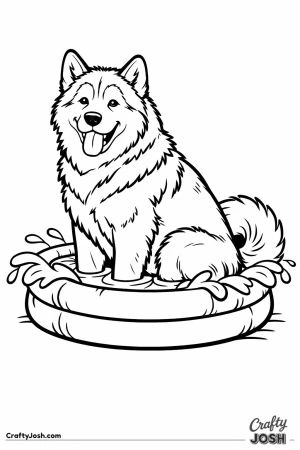
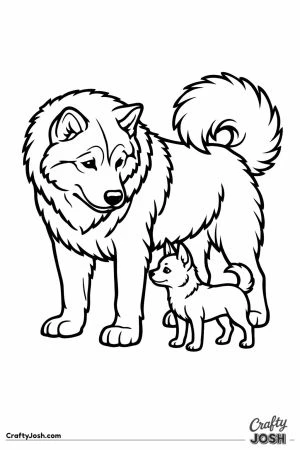
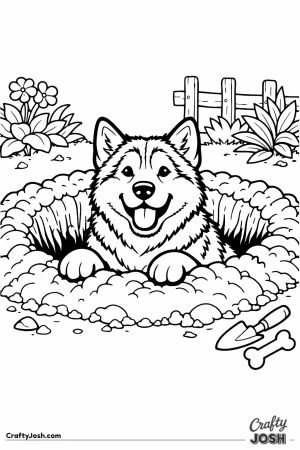
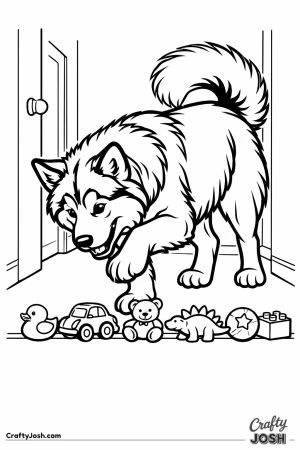
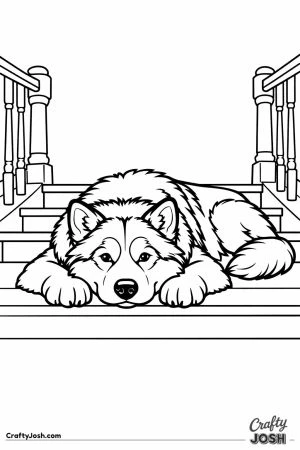
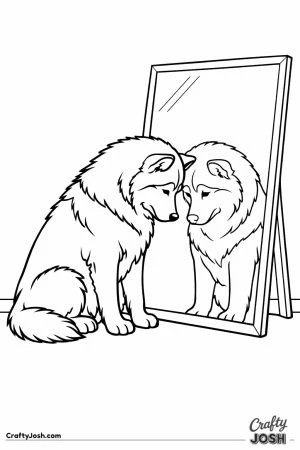
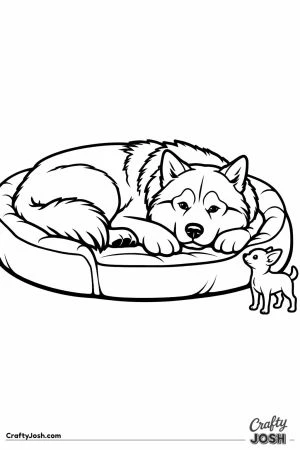
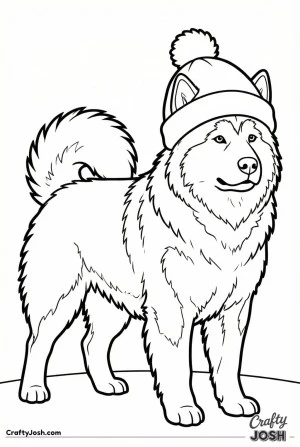
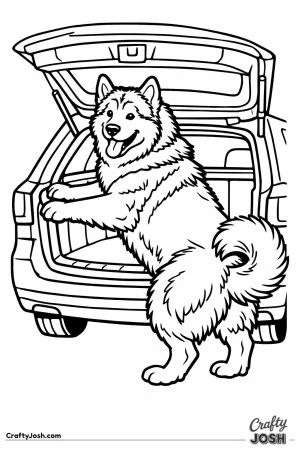
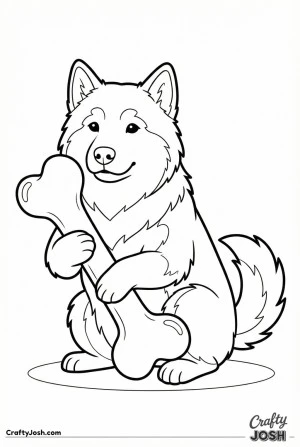
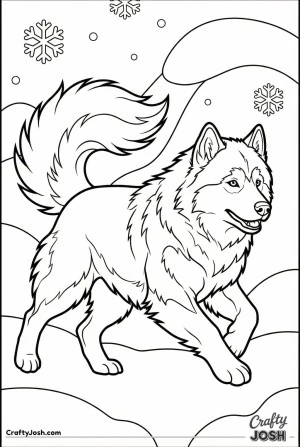
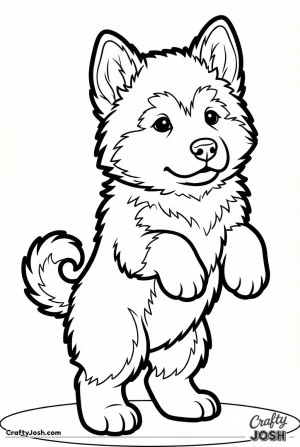
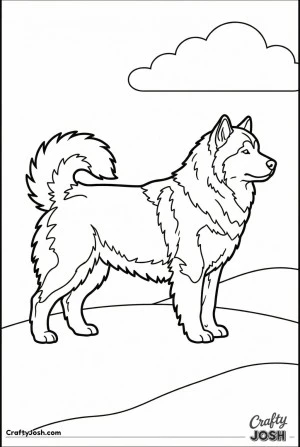
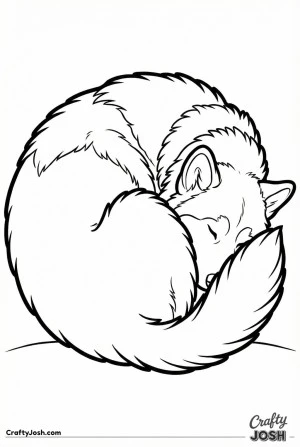
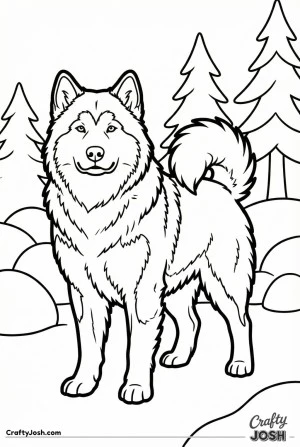
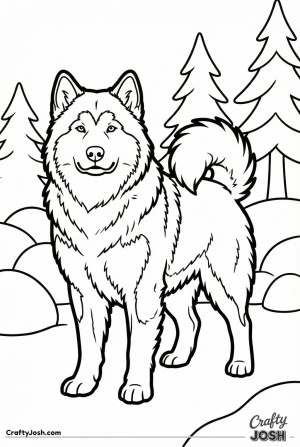
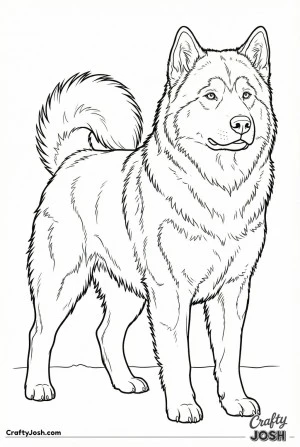
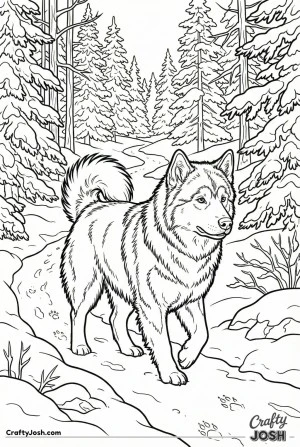
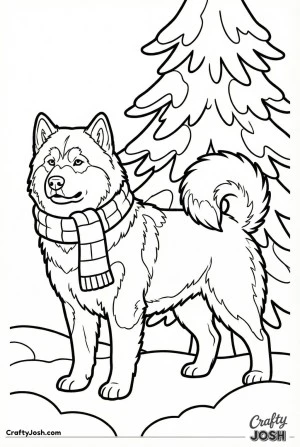
Malamutes have a powerful presence, and these 50 Malamute coloring pages capture it beautifully - thick coats, proud expressions, and that unmistakable sled-dog strength that makes them especially satisfying to color.
The collection includes classic working poses alongside calmer scenes that show off their sturdy build and surprisingly gentle nature. Simple enough for young children to enjoy, with enough detail in the coat textures and expressions to keep older kids and adults happily occupied.
All pages are free black-and-white PDF printables in both US Letter and A4 sizes - no signup needed, just download and print.
Want to see what other breeds we have? Head over to our dogs coloring pages for the full collection.
If a Husky is a sports car, a Malamute is a truck. Everything about these dogs is bigger, thicker, and fluffier. They have a wide chest, heavy legs, and a huge plumed tail that arcs up over their back like a feathery fan. When you're coloring one, think big and bold.
Malamutes are one of the oldest dog breeds in the world. They originally come from Alaska, where they were sled dogs built for pulling heavy loads through deep snow.
A Malamute can weigh as much as a grown-up person. Some males reach over 100 pounds.
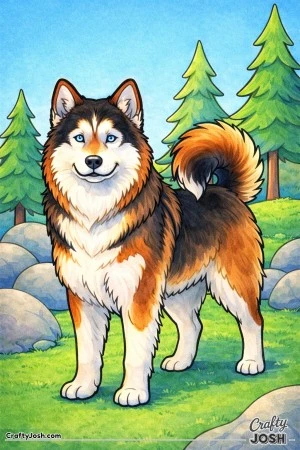
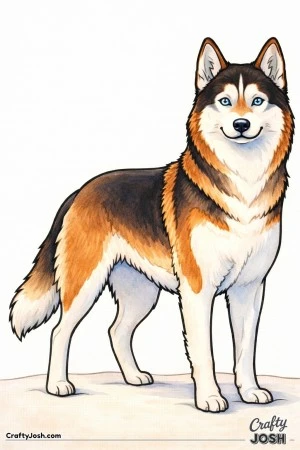
The colors are similar to a Husky - usually gray and white, black and white, or a reddish-brown and white - but there's more fur to fill in. The dark color covers the back and top of the head. The belly, legs, and most of the face are white or light cream. The line where the dark meets the light is soft and blended, so don't stress about making it sharp.
The face looks different from a Husky even though the pattern is similar. A Malamute has a broader head and the mask is usually more open, with a wider white stripe down the center and a bigger white area around the muzzle. Making that center stripe nice and clean helps the face look right.
Because the coat is so thick and dense, build it up in layers. Short overlapping strokes work well on the body - go over the same area two or three times, pressing a little harder each time. Around the neck there's an extra-thick ruff of fur that puffs out. Use quick strokes in slightly different directions there to make it look chunky and full rather than flat.
The tail deserves special attention. It's one of the fluffiest parts of the dog and fans out as it curves over the back. Color it darker on the top side and lighter underneath, with lots of soft strokes fanning outward from the base.