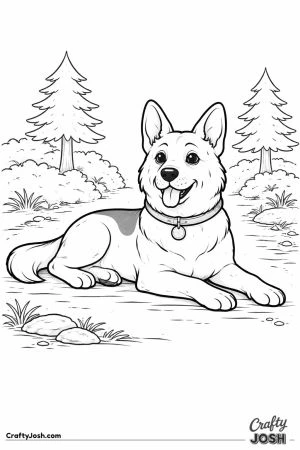
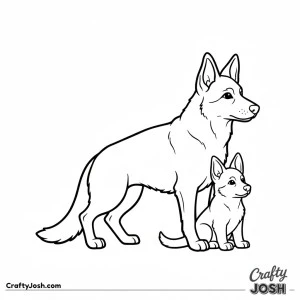
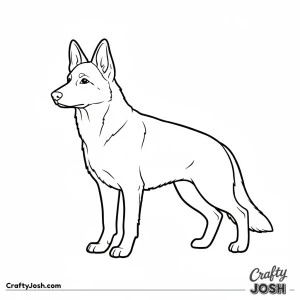
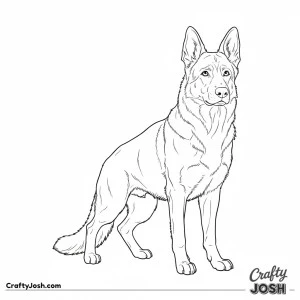
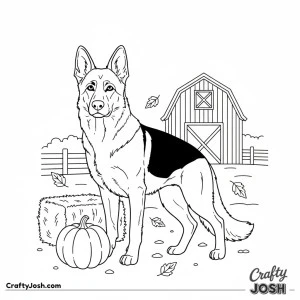
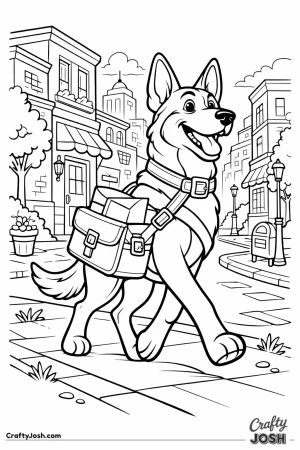
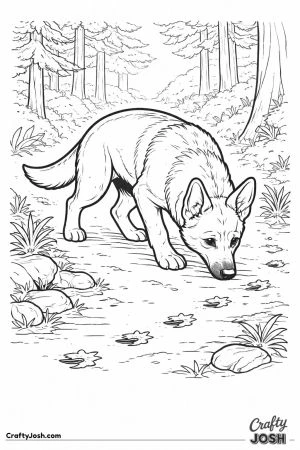
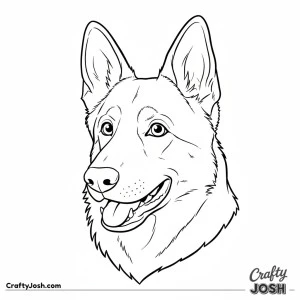
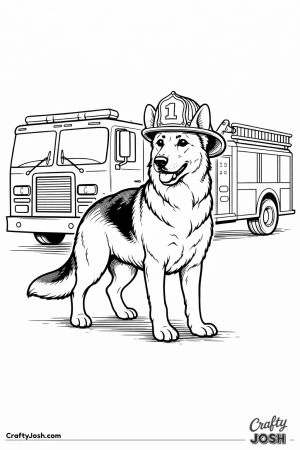
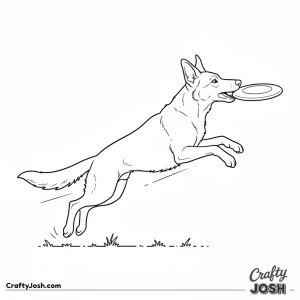
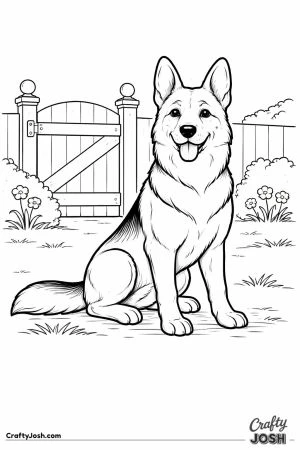
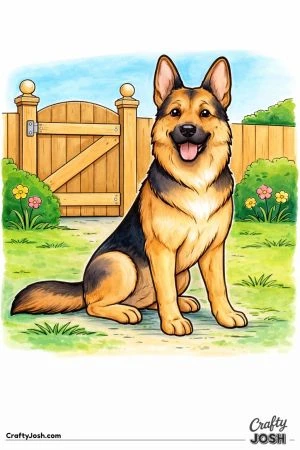
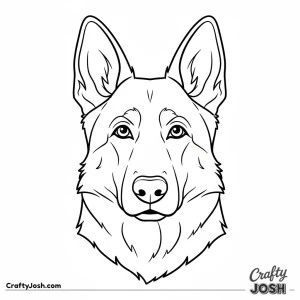
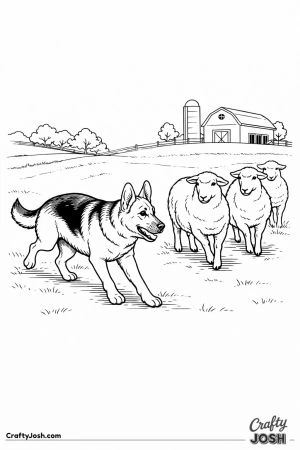
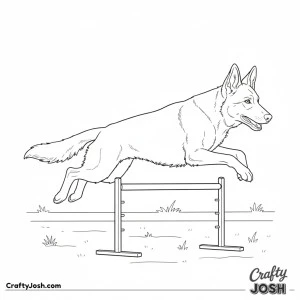
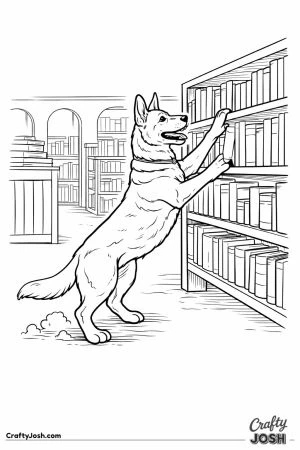
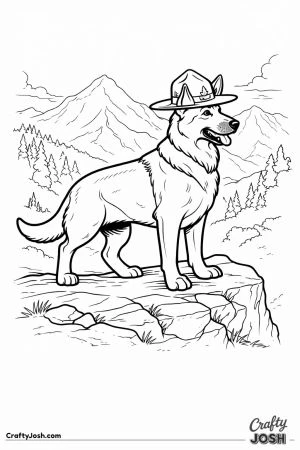
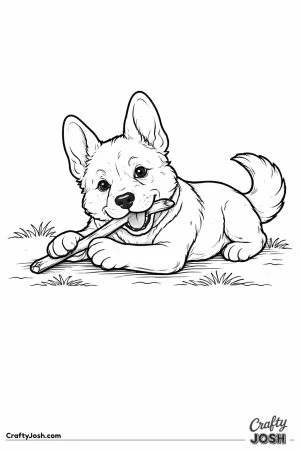
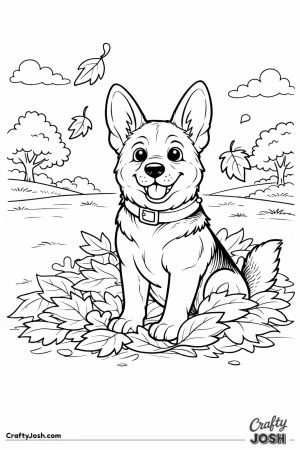
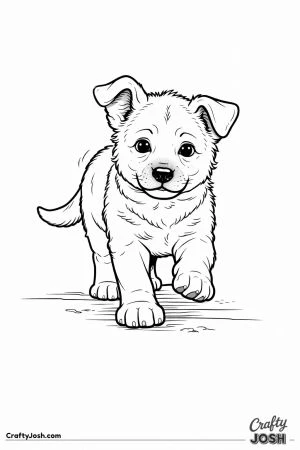
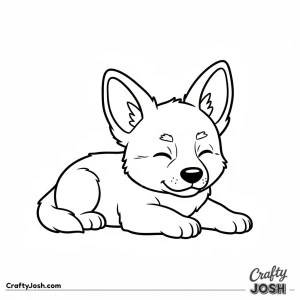
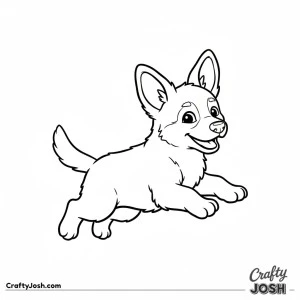
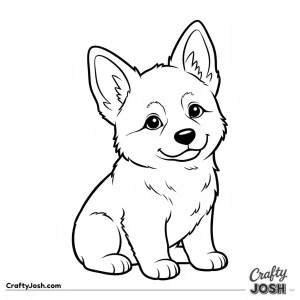
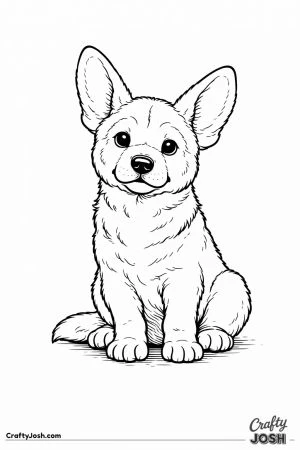
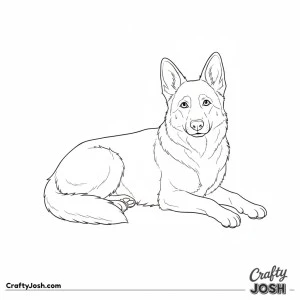
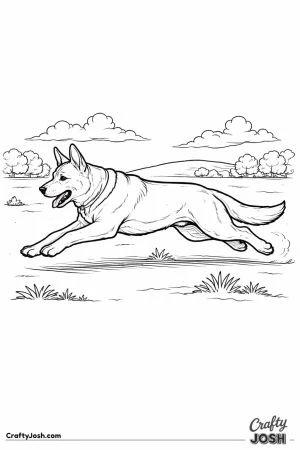
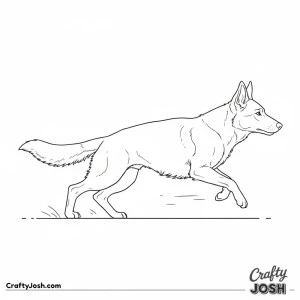
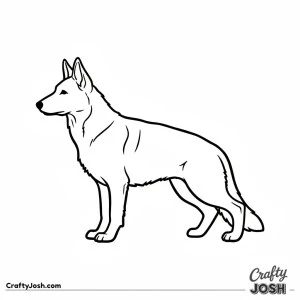
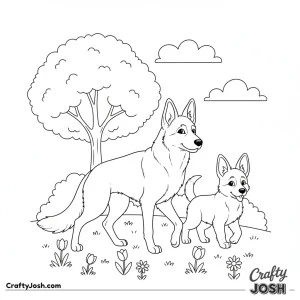
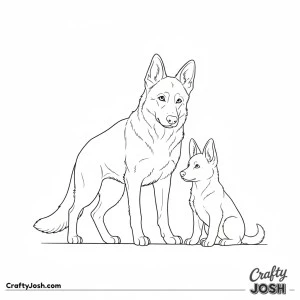
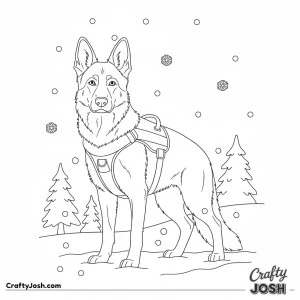
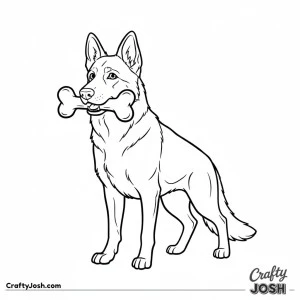
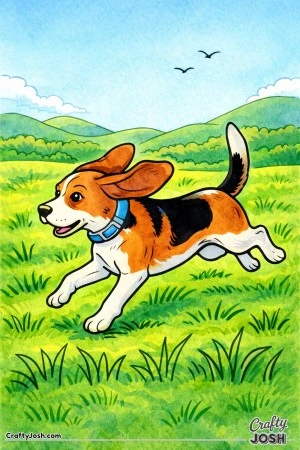
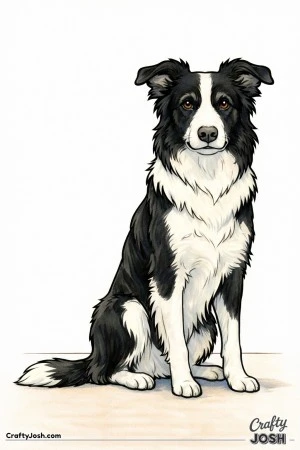
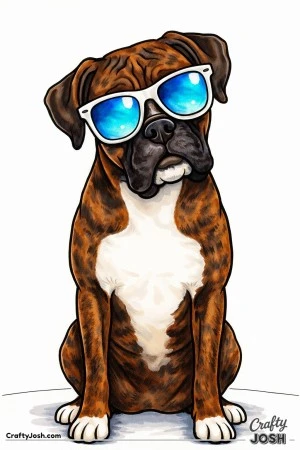
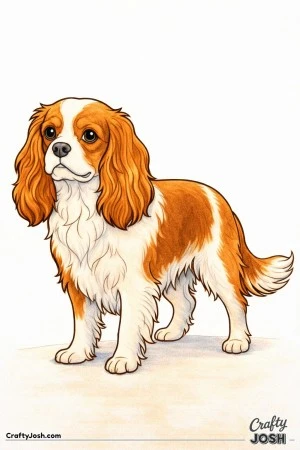
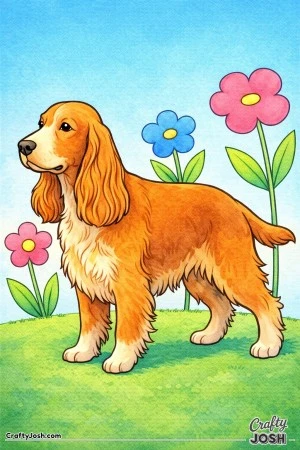
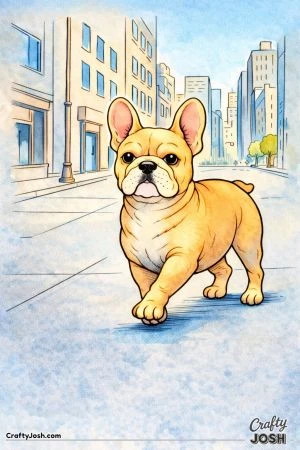
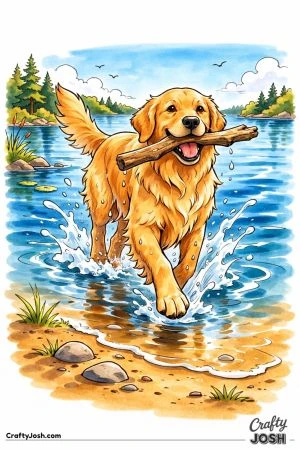
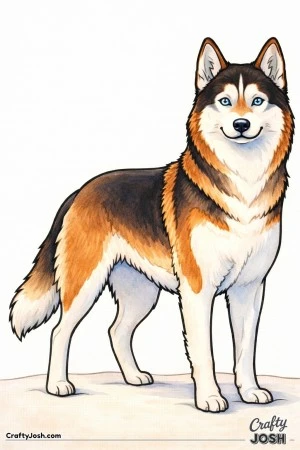
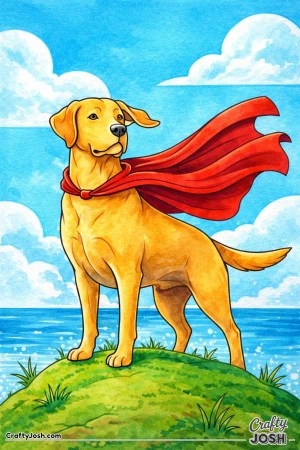
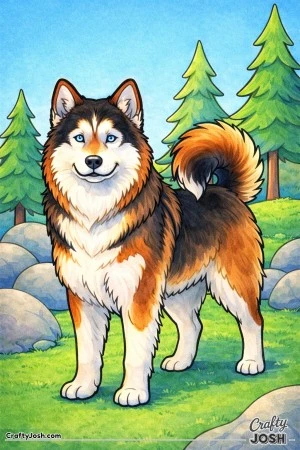
Few breeds are as instantly recognizable as the German Shepherd, and these German Shepherd coloring pages capture that alert expression and confident stance in a range of poses and scenes.
The collection includes watchful standing poses, playful puppies, and detailed designs that highlight their distinctive coats and strong build. Pages range from simple outlines suitable for younger children and preschoolers to more intricate versions for older kids and adults, so there's something for every skill level.
Each page is a free black-and-white PDF printable, available in both US Letter and A4 sizes, so you can download and print them easily at home or use them as a classroom activity.
If you're exploring other breeds too, browse the full selection on our dogs coloring pages.
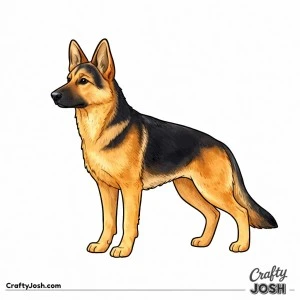
A German Shepherd is like a dog that comes with its own built-in color map. The back and the top of the body are covered in a big black area called a "saddle" - because it sits across the back like a horse's saddle. Everything below that - the legs, belly, chest, and most of the face - is a warm tan or reddish-brown.
Start by coloring the tan areas first and leaving the saddle for last. That way you can lay the black over the top without worrying about going over the edges. The tan should be warmer and darker on the legs and lighter on the chest and belly.
German Shepherds have one ear that sometimes flops over when they're puppies. As they grow up, both ears eventually stand straight up into a pointy triangle shape.
The face has its own mini color map too. Most German Shepherds have a dark muzzle that fades into tan on the cheeks, with darker shading around the eyes - almost like they're wearing a mask. Blend the black into the tan gradually instead of making a hard line where the two colors meet. A little bit of back-and-forth with both pencils in the same spot helps them mix together.
German Shepherds have a thick double coat. That means there's a fluffy layer underneath and a longer, rougher layer on top - which is why they always look so big and full.
Because of that thick coat, your pencil strokes should follow the direction the fur grows - down the back, down the sides, and outward on the fluffy chest and neck. The fur around the neck is especially thick, so use a few extra layers there to make it look full.
These dogs have a long, bushy tail that curves down and hangs low. It's usually dark on top and lighter underneath - a nice detail to add if your coloring page shows the tail clearly.